
Property assessments in Minnesota play a key role in determining your home’s taxable value and overall property tax bill. With all 87 counties following state guidelines but applying local variations, understanding the assessment process is essential. From rising 2026 levies to exemptions like homestead, knowing how assessments work helps homeowners plan budgets, avoid surprises, and make smarter real estate decisions.
How Property Assessments Are Conducted
In Minnesota, property assessments are handled by County Assessors or Local Assessor Offices. These assessments are primarily based on the estimated market value of a property, which is determined using recent sales data, property characteristics, and location.
Each county follows a structured assessment timeline, but values are updated annually to reflect current market trends. Local tax rates, including county, city, and school district levies, are then applied to calculate the final property tax. Eligible exemptions such as homestead, senior, or disability benefits help reduce the taxable value.
Factors Affecting Property Assessments
Several important factors influence how property values are assessed in Minnesota:
- Market Value Trends: Higher home values in a county increase assessed values and taxes.
- Property Improvements: Renovations, additions, or upgrades can raise your property’s assessed value.
- Location & County Differences: Urban counties like Hennepin may have higher values than rural counties.
- Exemptions and Credits: Homestead exclusion, senior benefits, and disability programs reduce taxable value.
- Local Levies: County, city, and school district budgets directly impact tax rates.
These factors ensure that property taxes are calculated fairly while giving homeowners opportunities to reduce their tax burden through exemptions and planning.
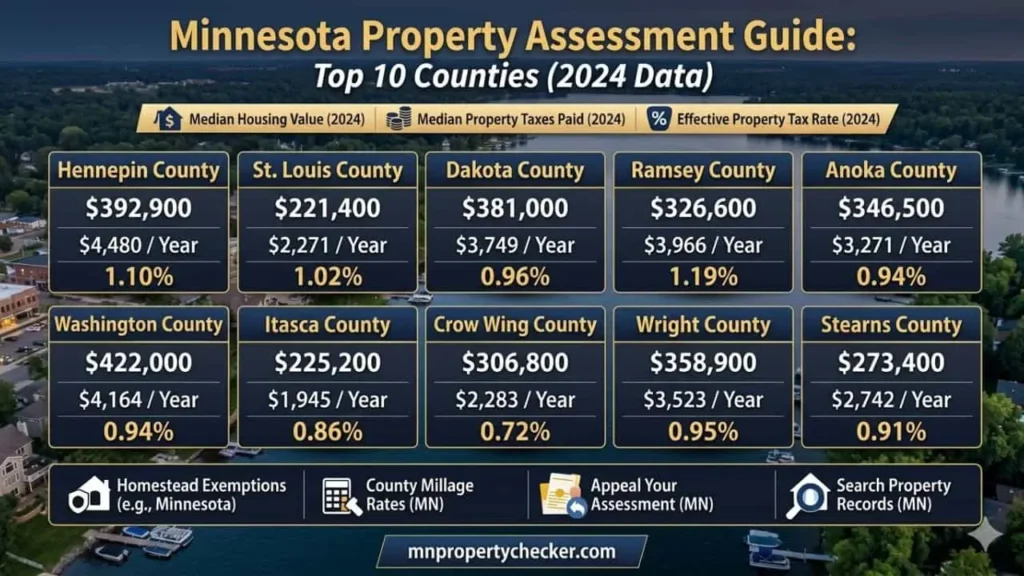
County-by-County Property Assessment (Top 10 Counties)
Hennepin County Property Assessment
Hennepin County is the largest in Minnesota with 447,650 parcels, including over 381,000 residential properties. The average single-family home is 62 years old with 1,633 sq. ft. In 2026, there were 2,202 residential sales. The effective property tax rate is around 1.2%, and assessments are updated annually based on market trends and property characteristics.
St. Louis County Property Assessment
St. Louis County includes 185,344 parcels, with more than 97,000 residential properties. Homes average 70 years old and 1,355 sq. ft. In 2026, there were 296 residential sales. The effective tax rate is approximately 1.01%, and 1.76% of homes are seriously underwater, impacting valuation trends.
Dakota County Property Assessment
Dakota County has 170,737 parcels, including nearly 149,000 residential properties. The average home is 42 years old with 1,833 sq. ft. In 2026, 658 residential sales were recorded. The effective property tax rate is about 0.98%, making it relatively moderate compared to other counties.
Ramsey County Property Assessment
Ramsey County contains 167,645 parcels, with over 148,000 residential units. Homes average 71 years old and 1,634 sq. ft. With 642 residential sales in 2026, the effective tax rate is higher at 1.32%, influenced by urban demand and local levies.
Anoka County Property Assessment
Anoka County includes 139,913 parcels, with 124,877 residential properties. The average home is 43 years old and 1,494 sq. ft. In 2026, 454 sales occurred. The effective property tax rate is around 0.93%, offering relatively affordable taxation compared to metro areas.
Washington County Property Assessment
Washington County has 118,954 parcels, including nearly 99,000 residential properties. Homes average 38 years old with 1,837 sq. ft. In 2026, there were 511 sales. The effective tax rate stands at 1.07%, reflecting steady suburban growth.
Itasca County Property Assessment
Itasca County includes 80,565 parcels, with 27,645 residential properties. The average home is 49 years old with 1,185 sq. ft. In 2026, 125 residential sales occurred. The effective tax rate is approximately 0.82%, lower than urban counties.
Crow Wing County Property Assessment
Crow Wing County has 79,228 parcels, including 43,889 residential units. Homes average around 40 years old with 1,508 sq. ft. The effective tax rate is relatively low at 0.56%, making it one of the more affordable counties for property taxes.
Wright County Property Assessment
Wright County contains 75,325 parcels, including over 54,000 residential properties. Homes average 33 years old and 1,612 sq. ft. With 0.72% of homes underwater, the effective property tax rate is about 0.86%, offering balanced affordability.
Stearns County Property Assessment
Stearns County includes 70,487 parcels, with over 52,000 residential properties. The average home is 46 years old with 1,743 sq. ft. The effective property tax rate is approximately 1.05%, influenced by local development and county levies.
Understanding Property Tax Rates in Minnesota
Property tax rates in Minnesota vary by county and are influenced by:
- Local government budgets (county, city, school districts)
- Market value of properties
- Exemptions such as homestead benefits
Unlike some states, Minnesota uses a combination of classification rates and local levies, making it important for homeowners to understand how their county determines final tax amounts.
How to Appeal Your Property Assessment in Minnesota
If you believe your property has been over-assessed, you can file an appeal with your local County Assessor’s Office.
Steps include:
- Review your property valuation notice
- Compare with recent nearby sales
- Submit evidence (photos, appraisals, reports)
- File an appeal before the county deadline
Each Minnesota county has its own process, so always check your local assessor’s website for exact procedures.
Tools & Resources
- Minnesota County Assessor websites for each county
- Online property search tools for assessed values
- Public records for exemptions and tax history
- Downloadable reports for market trends and tax estimates
Conclusion
Property assessments in Minnesota vary by county, influenced by market values, local levies, and available exemptions. Major counties like Hennepin, Ramsey, and Dakota often have higher property taxes due to stronger housing demand and higher assessed values. By regularly reviewing assessments and applying eligible exemptions such as homestead or senior benefits, homeowners can ensure fair taxation and plan their finances more effectively.
FAQs
What is the property assessment process in Minnesota?
Property assessments in Minnesota are conducted annually by county or local assessors. They determine taxable value based on market trends, recent property sales, and property characteristics, which directly impacts annual property taxes.
How are property taxes calculated in Minnesota counties?
Property taxes are calculated by applying local county, city, and school district levies to the assessed property value. Exemptions like homestead, senior, or disability benefits can reduce the taxable value and overall tax burden.
Which counties have the highest property taxes in Minnesota?
Among the top counties, Ramsey County and Hennepin County generally have higher effective tax rates due to urban demand, higher property values, and local levies.
Can homeowners appeal their property assessments in Minnesota?
Yes, homeowners can appeal through their County Assessor’s Office. They must provide supporting evidence such as recent comparable sales, appraisal reports, or property condition details. Each county has specific deadlines and procedures.
What exemptions can reduce property taxes in Minnesota?
Minnesota offers several exemptions and relief programs, including Homestead Exclusion, Senior Property Tax Deferral, Disability benefits, and Veteran-related programs, which help lower taxable value and reduce annual taxes.